GPT-5’s Scientific ‘Acceleration’: Are We Chasing Breakthroughs or Just Smarter Autocomplete?
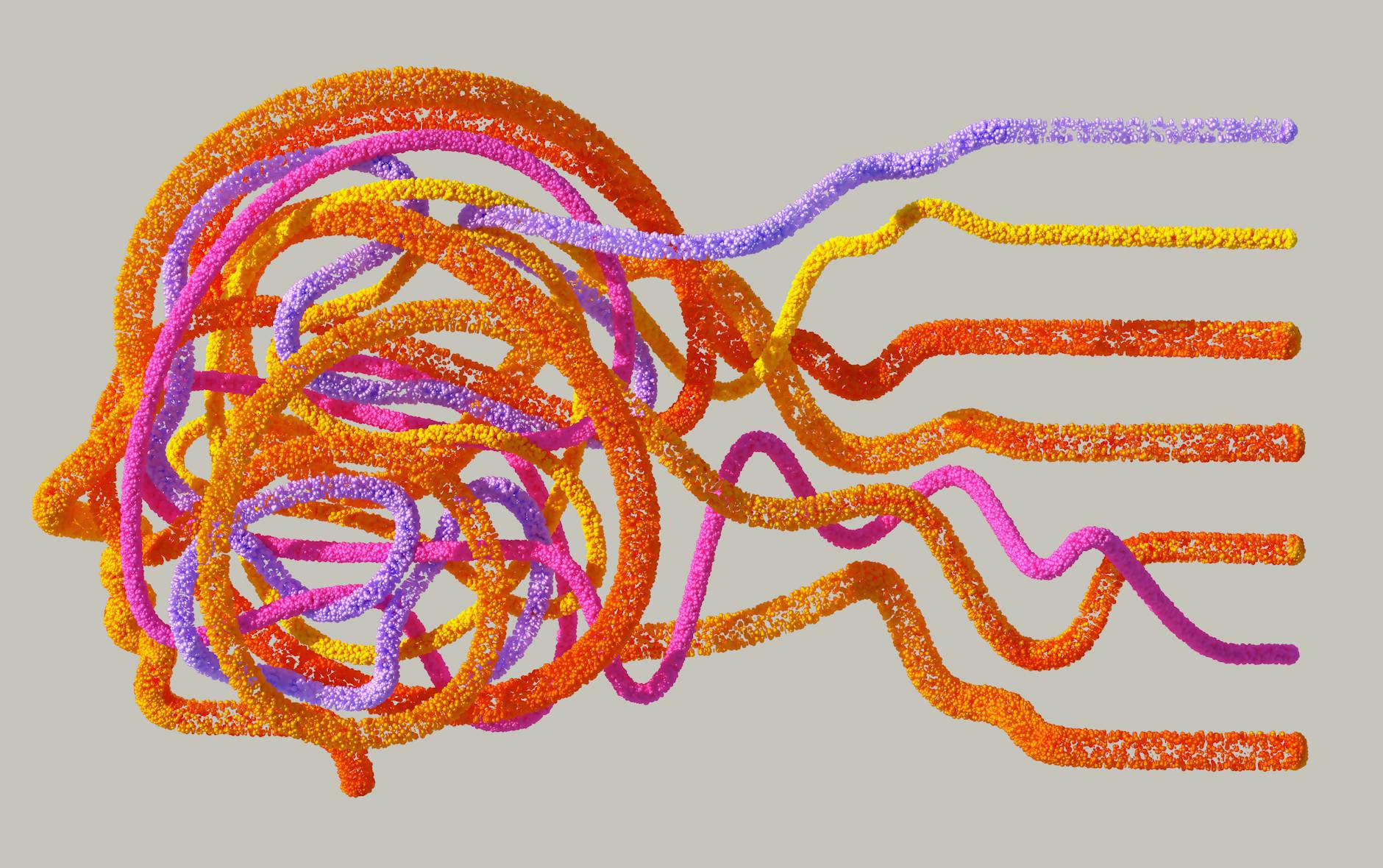
Introduction: OpenAI’s latest pronouncements regarding GPT-5’s ability to “accelerate scientific progress” across diverse fields are certainly ambitious. The promise of AI-driven discovery sounds revolutionary, but as a seasoned observer, I have to ask: is this a genuine paradigm shift, or simply an advanced tool being lauded as a revolution, potentially masking deeper, unaddressed challenges within the scientific method itself?
Key Points
- GPT-5 primarily functions as a powerful augmentation tool for researchers, streamlining iterative tasks and hypothesis generation rather than offering truly autonomous, ground-up discovery.
- The immediate implication for the research landscape is a rapid consolidation of advantage for well-resourced institutions able to afford and integrate such advanced, costly AI infrastructure.
- A critical challenge lies in the inherent “black box” nature of large language models, making the validation of AI-generated proofs and the explainability of “uncovered insights” a persistent and unsettling hurdle.
In-Depth Analysis
OpenAI’s carefully worded announcement about GPT-5 accelerating science deserves a more nuanced read than the typical breathless headlines. On the surface, the idea of an AI generating proofs and uncovering insights across math, physics, biology, and computer science sounds like something out of a Isaac Asimov novel. However, when we strip away the marketing sheen, what we likely have is a highly sophisticated pattern-matching and synthesis engine, albeit one operating on an unprecedented scale.
The ‘why’ GPT-5 can do this is rooted in its gargantuan training data – essentially ingesting a significant portion of humanity’s recorded scientific knowledge. This allows it to identify subtle correlations, synthesize information from disparate sources, and generate coherent text in a way that mimics scientific reasoning. It excels at tasks like comprehensive literature reviews, proposing plausible hypotheses based on existing data, or even drafting the boilerplate for experimental designs and code. This isn’t necessarily true creativity or understanding; it’s an advanced form of intelligent recombination and extrapolation based on its training corpus.
Compared to previous generations of AI tools, which were often narrowly specialized (e.g., drug discovery algorithms for specific protein folding, or statistical analysis packages), GPT-5 represents a step towards general-purpose scientific assistance. However, this generality comes with a cost: it still lacks true independent critical reasoning, the ability to design experiments from first principles without explicit human guidance, or the capacity to formulate truly novel theoretical frameworks that aren’t implicitly contained within its training data. It’s a hyper-efficient research assistant, not a sentient scientific genius capable of profound conceptual leaps.
The real-world impact, therefore, is likely to be a mixed bag. On one hand, the efficiency gains in certain stages of research – say, the initial ideation or literature synthesis phase – could be significant. Researchers might spend less time sifting through papers and more time designing experiments. But the dark side is equally potent. The inherent biases within its vast training data mean GPT-5 will likely perpetuate or even amplify existing biases in scientific literature, potentially skewing research directions or overlooking marginalized perspectives. Furthermore, the opacity of its internal workings threatens to exacerbate the reproducibility crisis if scientists too readily accept AI-generated insights without rigorous human validation. And let’s not forget the sheer computational cost and energy footprint of running such models, potentially widening the divide between well-funded institutions and the rest, thus centralizing scientific power rather than democratizing it.
Contrasting Viewpoint
While skepticism is a healthy default, one could argue that even incremental improvements, when scaled, lead to profound change. A more optimistic perspective would highlight that GPT-5, even if “just” an advanced assistant, frees human scientists from rote, time-consuming tasks, allowing them to focus on higher-level conceptual thinking, experimental design, and interpretive analysis where human intuition and creativity remain paramount. The “black box” concern, while valid, is an active area of research in explainable AI (XAI), and iterative improvements will eventually make these models more transparent. Furthermore, the argument that AI merely recombines existing knowledge overlooks the sheer volume and complexity of the data GPT-5 processes, often leading to non-obvious connections and hypotheses that a human might never identify. The history of science is replete with new tools, from microscopes to supercomputers, each initially met with skepticism before becoming indispensable. GPT-5, in this view, is simply the next logical evolution in our scientific toolkit, and its cost will inevitably decrease, democratizing access over time.
Future Outlook
Over the next 1-2 years, we’re likely to see GPT-5 and its successors become increasingly integrated into very specific, niche scientific applications, rather than a wholesale revolution across all fields. Expect to see specialized AI tools, built on top of or inspired by these large language models, emerge in areas like targeted drug discovery, materials science simulations, or highly formalized mathematical proof assistance. The wholesale “reshaping of the pace of discovery” is still far off.
The biggest hurdles remain formidable. Firstly, establishing trust and verifiable accountability for AI-generated insights is paramount; who is liable when an AI “proof” contains a subtle flaw with real-world consequences? Secondly, the ethical guidelines for AI in scientific research are largely unwritten, leaving open questions about data privacy, intellectual property, and potential misuse. Finally, the sheer infrastructure cost and computational power required to deploy and maintain these advanced models at scale, across the globe’s diverse research institutions, is a challenge that current funding models are ill-equipped to handle, potentially creating a significant technological divide.
For a deeper dive into the inherent biases and interpretability challenges facing AI models, see our previous analysis on [[The Black Box Problem in AI]].
Further Reading
Original Source: Early experiments in accelerating science with GPT-5 (OpenAI Blog)